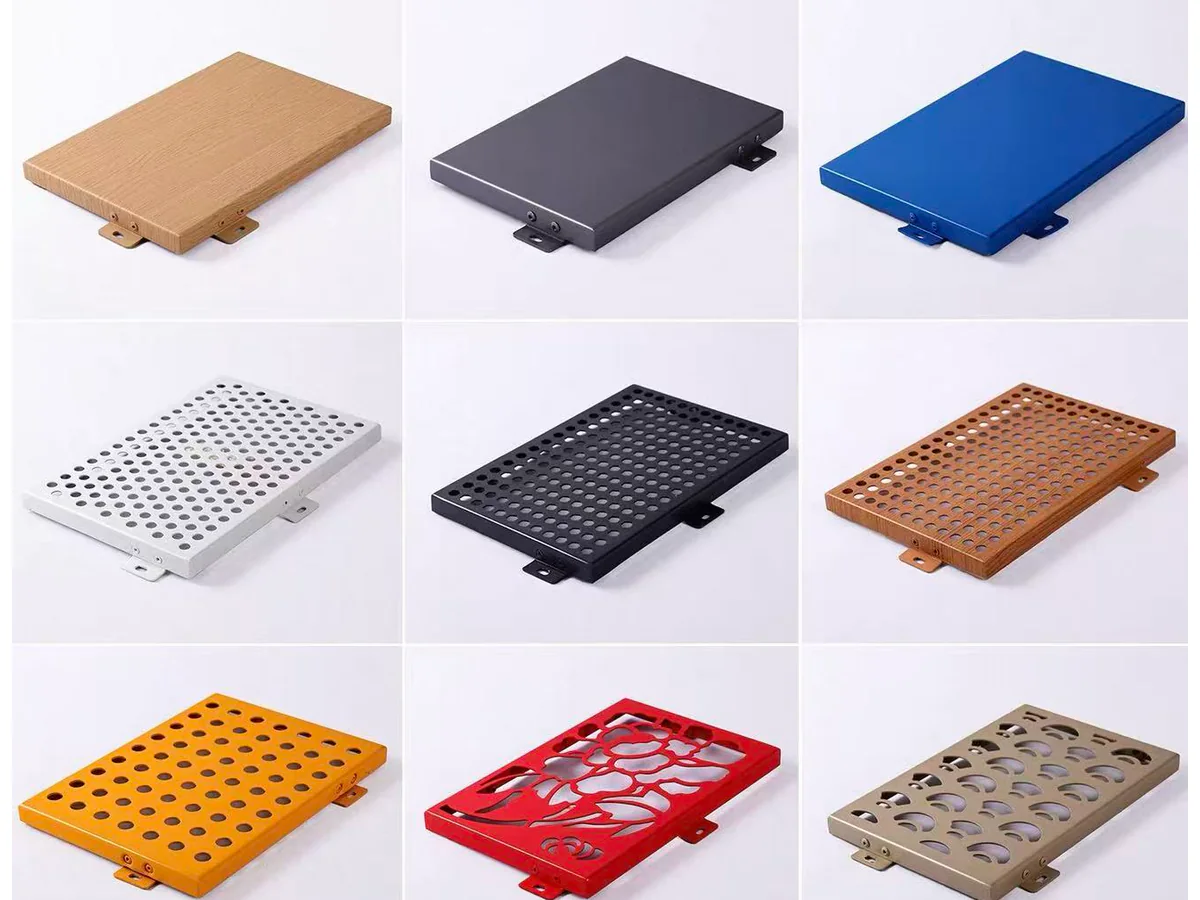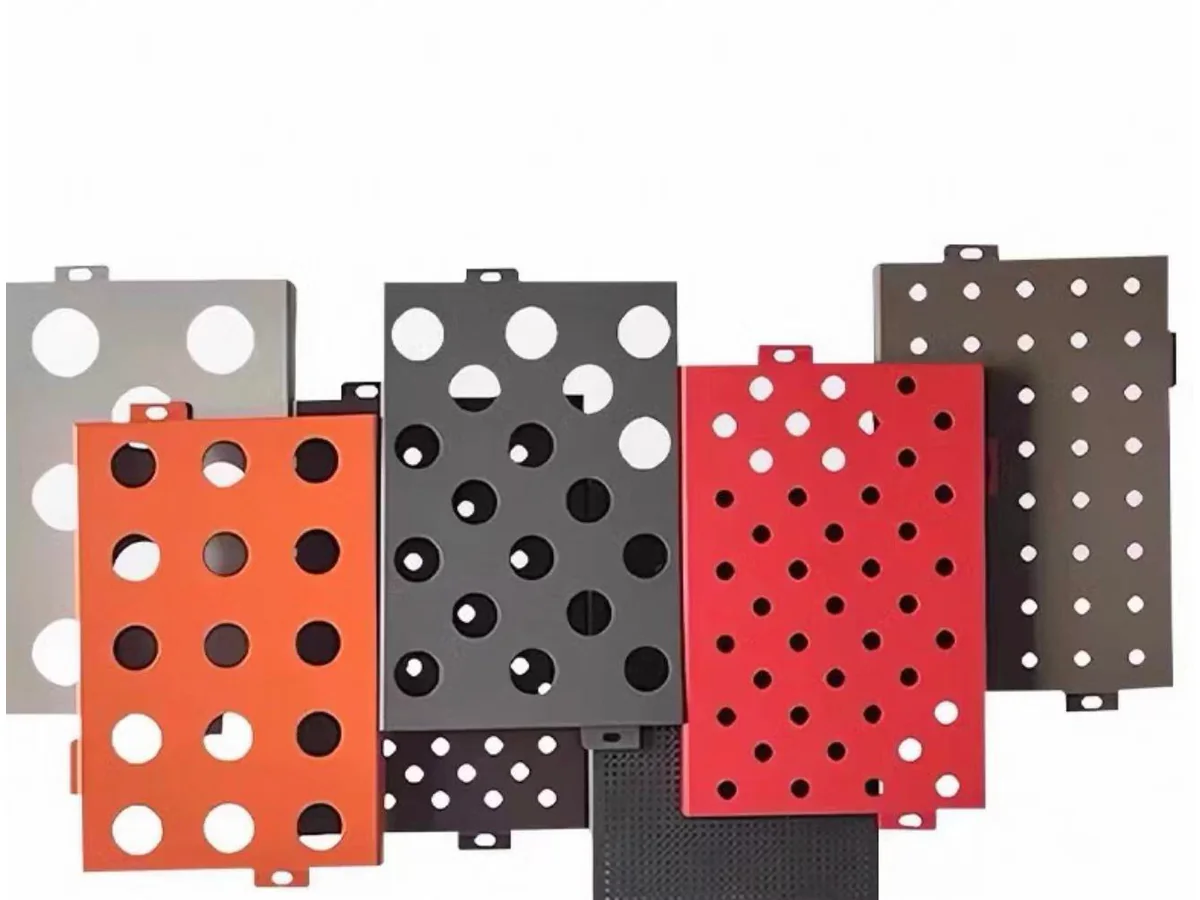
Perforation can serve several architectural purposes
A perforated aluminium panel can be a visual screen, but openings may also contribute to ventilation, solar control, privacy, filtered daylight or building identity. These functions affect how the pattern should be developed and supported.
- Ventilation for screened plant or service areas
- Solar shading and control of direct views
- Privacy while maintaining openness
- Filtered daylight and changing shadow effects
- Facade rhythm, graphic pattern and building recognition
Pattern, hole size and open area need review together
Hole diameter or shape is only one part of the design. Pitch, edge margins, open-area ratio, pattern direction and transitions between panels affect appearance and fabrication.
When ventilation or shading performance is important, the open-area requirement should be defined by the responsible designer. Fabrication drawings can then translate that intent into a repeatable pattern.
For perforated aluminium panels, design intent and fabrication accuracy must work together.
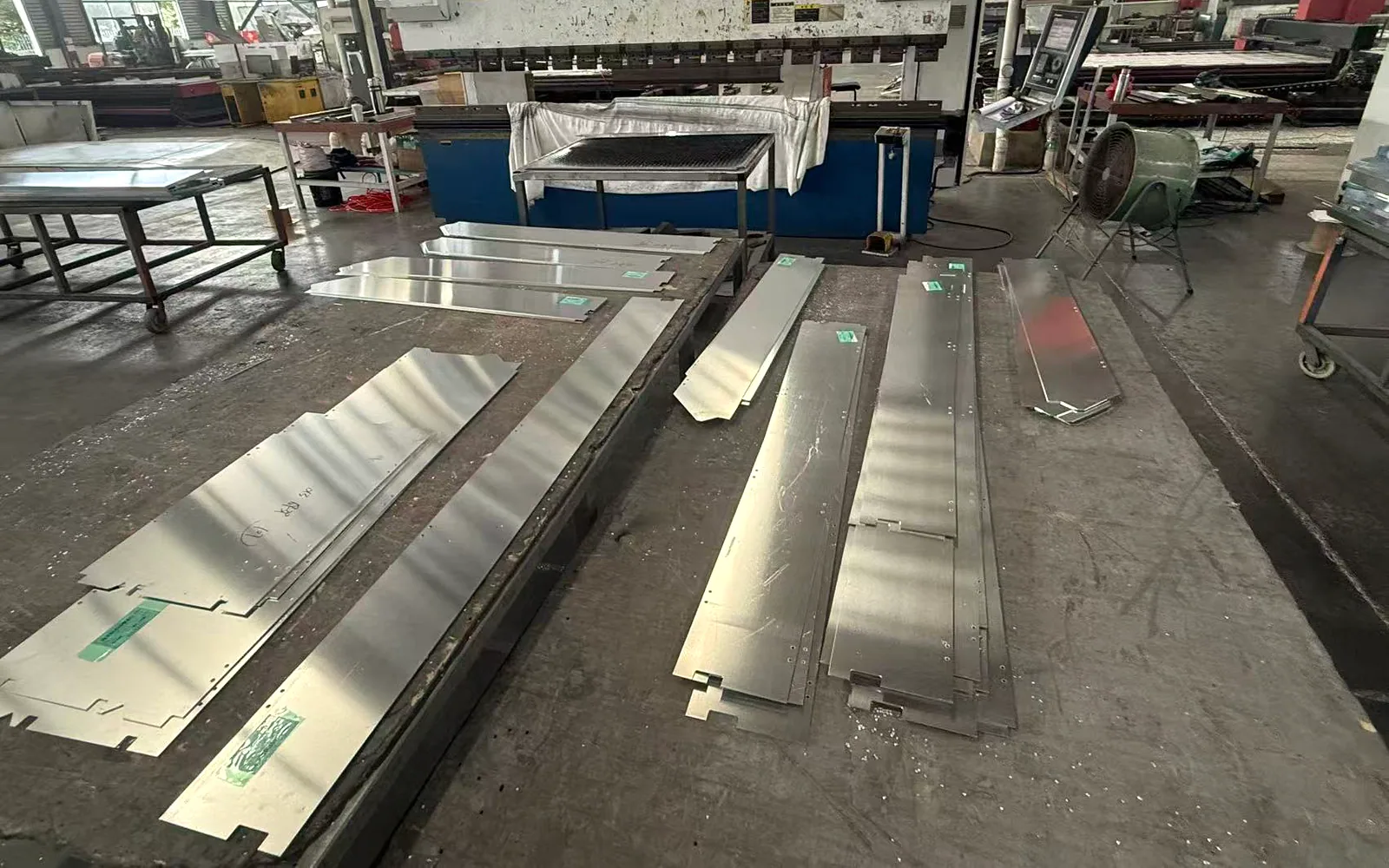
Perforation changes how a panel behaves during fabrication
Removing material changes panel stiffness and can influence forming, handling and flatness. Closely spaced holes, large openings or perforations near bends may require special review. Thickness, return depth, reinforcement and fixing should be considered as one component.
- Panel thickness relative to size and open area
- Material around holes, edges, bends and fixings
- Bending sequence and pattern distortion near returns
- Stiffeners, frames or supports where specified
- Handling and protection of narrow areas
Fixing and joints affect the visible pattern
Panel edges, joint width and fixing method can interrupt or frame the pattern. Designers should decide whether it stops at each panel, aligns across joints or changes deliberately. Supports may also be visible through larger openings.
Coordinating these details before production reduces mismatch and avoids holes conflicting with folds, brackets or fasteners.
Surface finish and fabrication accuracy complete the design
Coating must cover perforated edges as required by the approved system. Colour, texture and gloss influence how light reveals the pattern, while consistent punching or cutting supports alignment.
A sample panel or prototype can help review pattern scale, transparency, edge details, finish and fixing before wider production.